Six months on a $500 phone (Pixel 9a) — what flagship actually buys you
I traded my Pixel 10 Pro for a Pixel 9a six months ago — not because of money, but out of curiosity. Camera 90% of the flagship, screen 70%, performance 95%, battery 110%. Here's the honest verdict after 6 months, and the 5 things flagships actually give you for the extra $500.
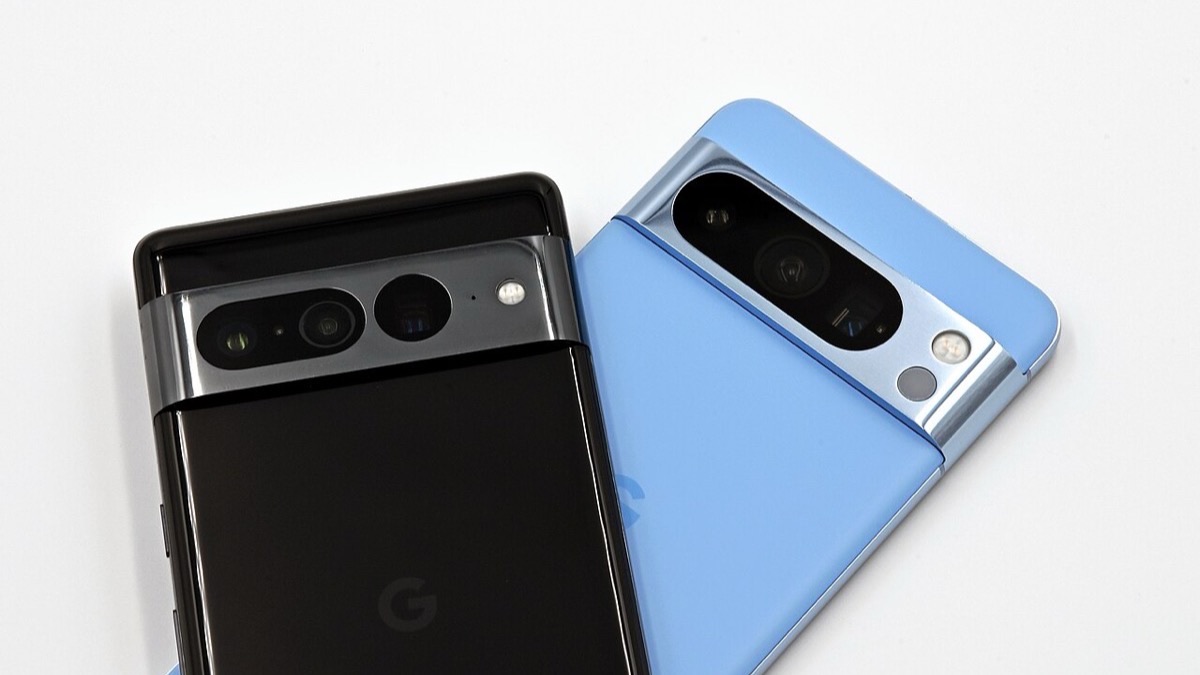
In November 2025 I sold my Pixel 10 Pro and bought a Pixel 9a at $499. Not because I was broke — I’m still freelancing full-time with steady rates.
The real reason: after 8 months on the flagship, I couldn’t tell what Pixel 10 Pro did better than the Pixel 8a (my friend’s daily) in any of my actual daily workflows. I got curious: what does a $500 phone really lack compared to a $1000+ one?
Six months later, here’s the answer. Not benchmarks, not spec sheets — just 180 days of using it as a primary phone with a freelance-dev workflow plus normal life.
Quick spec snapshot
Pixel 9a (April 2025, $499):
- Tensor G4 (same chip as Pixel 9 / 9 Pro)
- 8GB RAM
- 6.3” OLED 120Hz, 2700 nits peak
- 48MP main + 13MP ultrawide
- 5100 mAh battery
- IP68
- 7 years of OS updates
Pixel 10 Pro (Aug 2025, $999):
- Tensor G5 (Samsung 3nm)
- 16GB RAM
- 6.3” LTPO OLED 120Hz, 3000 nits peak
- 50MP main + 48MP ultrawide + 48MP 5x tele
- 4870 mAh battery
- IP68
- 7 years of OS updates
Price gap: $500. On-paper spec gap: large. Real-world gap: smaller than you’d think.
5 things flagships actually win on (after 6 months)
1. 5x tele zoom — the one thing you can’t replace
This is where Pixel 10 Pro wins outright.
Pixel 9a has 1 tele camera (well — doesn’t, just digital zoom from the 48MP main). 2x crop is fine, 5x crop starts noising up, 10x is unusable.
Pixel 10 Pro has a 48MP 5x optical tele — optical to 5x, digital to 30x still usable.
Real use cases for me:
- Shooting the neighbor’s dog from the balcony (8m away) — Pixel 9a noisy, Pixel 10 Pro sharp
- Reading a faraway menu in a café — Pixel 9a I have to walk over, Pixel 10 Pro I can zoom
- Concert / event shots — Pixel 10 Pro wins decisively
If you shoot a lot, this is where the flagship earns its money. If you mostly shoot food / selfies / scenery — irrelevant.
Verdict: 5–10% of cases I need real zoom. Meaning $500 buys about 5% better camera coverage.
2. Outdoor screen — Pixel 10 Pro clearly better
Midday sun in Saigon, sitting at an outdoor café:
- Pixel 9a at 2700 nits peak: readable but I have to shade the screen with my hand
- Pixel 10 Pro at 3000 nits peak + LTPO: comfortably readable
300 nits on paper doesn’t sound like much. In actual harsh sunlight it’s a noticeable difference. I spend ~30 min/day outdoors (café, waiting for the metro).
Verdict: ~15–20% better outdoor experience. Not a must-have if you’re indoors 90% of the time.
3. 16GB RAM — real difference, but for whom?
Pixel 10 Pro has 16GB, 9a has 8GB. Does double = double performance? No.
I tested:
- 10 apps + 5 Chrome tabs open simultaneously. 9a: keeps 7/10 apps alive, drops 2 Chrome tabs on return. 10 Pro: keeps all 10 apps + 5 tabs alive.
- Gemini Nano on-device features (Magic Cue, Pixel Studio): 9a is ~30% slower — e.g., Pixel Studio takes 8s to generate an image vs 5.5s.
- Multitasking: both run split-screen fine. But the 9a occasionally kills an app when switching back after 10 minutes.
My actual 16GB use cases:
- Termux SSH + Obsidian + Spotify + Chrome with 5 tabs: 9a just enough, occasionally drops the Termux session on switch-back
- Pixel Studio + Magic Compose: 9a slower but functional
- Heavy gaming (Genshin Impact, not my thing): 9a heats up sooner, drops fps
If you’re a power user (10+ background apps, constant AI features) — 16GB earns its keep. If you use 2–3 apps + WhatsApp + Spotify — 8GB is plenty.
4. Build quality — feel is different, but not “bad”
Pixel 10 Pro: titanium frame, Gorilla Glass Victus 2 front and back, dense in hand, 199g that feels “premium.”
Pixel 9a: aluminum frame, Gorilla Glass 3 front, plastic back, 185g, feels “decent plastic.” Not bad — Pixel 9a punches above the $500 it promises. But next to the 10 Pro, the class difference is obvious.
Tactile: 10 Pro’s power button has a “premium” click, its vibration motor has Taptic-style heft while 9a’s vibration feels “stubby.” Small details, but you feel them daily.
Verdict: $500 buys the premium feel. Whether that feeling matters to you is a personal question.
5. Charging speed — flagship is faster
Pixel 10 Pro: 27W wired, 21W wireless. Full charge 0–100% in ~75 min. 0–50% in ~25 min.
Pixel 9a: 23W wired, 7.5W wireless. Full charge 0–100% in ~95 min. 0–50% in ~30 min.
In practice: I overnight-charge 99% of the time, don’t care about speed. Occasionally I need an emergency top-up before heading out — Pixel 10 Pro saves 5–10 minutes. Tiny use case.
Verdict: 5% better experience, not worth $500 on its own.
4 things Pixel 9a actually doesn’t lose on
1. Main camera — 90% of the flagship
Pixel 9a’s 48MP, despite a smaller sensor than the 10 Pro, runs the same Tensor pipeline. Result:
- Natural daylight shots: 95% identical to 10 Pro
- Night Sight: 90% identical (10 Pro slightly better at highlight retention)
- Magic Eraser, Best Take, Pixel Studio: identical
I’ve done 50+ paired shots of the same scene. I cannot tell the difference unless I pixel-peep at 1:1. On Instagram / website / casual viewing = indistinguishable.
2. Battery — Pixel 9a actually lasts longer
Pixel 9a has 5100 mAh + the more efficient Tensor G4. 10 Pro has 4870 mAh + Tensor G5 (more powerful but more power-hungry).
Real screen-on time:
- Pixel 9a: 7.5–8h SOT per charge
- Pixel 10 Pro: 6.5–7h SOT per charge
That’s 10–15% better. Pixel 9a is one of the rare phones where I can forget to charge overnight and still make it through the next morning.
3. UI / Updates — identical
Both run Android 15, both have 7-year OS update commitments. Magic Cue, Gemini, Pixel features — all on the 9a (slightly slower, never missing).
This is the key point: Pixel 9a is not software-nerfed. Google doesn’t gate features. Only the Pro Magic features need 16GB (high-quality Pixel Studio, Gemini Live while screen-recording).
4. The “I’m not scared of dropping it” feeling
This is a psychological factor I didn’t expect.
Pixel 10 Pro at $1000: I always used a case + screen protector + treated it carefully. Set it down gently. Held it tight on the metro.
Pixel 9a at $500: I carry it naked, no case, no screen protector. If I drop it, fine — $500 broken isn’t $1000 broken. I use the phone more freely.
This matters more than I thought. A phone is a tool you use all day — the low-grade “don’t break it” anxiety is small but constant.
Verdict after 6 months
I’m keeping the Pixel 9a as my primary phone until the Pixel 11a drops (expected April 2027). Why:
- 5% better camera tele isn’t worth $500 to me (I don’t shoot far that often)
- Outdoor screen is worth ~5% — not $500
- 16GB RAM isn’t necessary for my current workflow (Termux + Obsidian + Spotify + Chrome is fine)
- Premium build is worth a few tens of dollars, not $500
- Charging speed doesn’t matter because I overnight-charge
Net: Pixel 10 Pro gives me about 15–20% better experience at 2× the price.
That ratio doesn’t work for me. It may work for you.
When should you buy a $1000+ flagship?
Buy flagship if:
- You shoot a lot of photos and need optical tele zoom
- You spend >1h/day outdoors (bright screen matters)
- You’re a power user (10+ background apps, heavy AI features)
- You see the phone as a 3–5 year investment (premium build is worth it long-term)
- You enjoy premium / luxury feel
Don’t buy flagship if:
- You mostly use the phone for social + messaging + casual photos
- You can’t pixel-peep camera differences
- You’re indoors 90% of the time
- You don’t game heavily
- You replace your phone every 2 years (no need for durable premium build)
One surprise — flagship phones are drifting outside the rational zone
Looking back over 6 months, my biggest takeaway isn’t “Pixel 9a is good.” It’s that flagship phones at $1000+ are increasingly irrational for 80% of users.
The spec gap between mid-range and flagship 5 years ago (2021): obvious. Mid-range cameras were genuinely bad, screen was 60Hz vs 120Hz, performance was a real gap.
The gap in 2026: significantly smaller. Mid-range now has Gemini Nano, 120Hz screen, computational camera, water resistance, 7-year updates. Flagship wins on edge cases (5x tele, harsh sunlight, heavy AI).
Smartphones have hit the “good enough” plateau. Flagships still improve, but the improvements shifted from “must-have” to “nice-to-have.” Mid-range $500 in 2026 ≈ flagship $1000 in 2022.
This is a mature market. Like laptops in the 2010–2015 era when every $1500+ laptop was clearly better than a $700 one. Now Macbook Air $1000 matches Macbook Pro $2000 for 90% of non-creative workloads.
Phones are at that stage. Mid-range is officially enough.
Closing
I’m not saying Pixel 10 Pro is a bad phone. It’s an excellent one. I’m saying the $500 gap doesn’t buy enough improvement for my usage pattern.
Yours might differ. Heavy photographers need the tele. Outdoor people need the bright screen. Power users need 16GB. Flagships are worth it for them.
But if you’re about to buy a Pixel 10 Pro / iPhone 17 Pro / Galaxy S26 without a specific reason — try mid-range first. Odds are you don’t need the extra $500. Odds are you can use that money for something else (a holiday, savings, a used Fujifilm X-T50).
A phone is a tool. Mid-range in 2026 is a good-enough tool for 80% of people.
Sources
- Pixel 9a spec from Google Store. Tested unit: 128GB, Iris.
- Pixel 10 Pro spec for comparison from Google Store. Tested unit: 256GB, Obsidian.
- Tensor G4 vs G5 benchmark from Geekerwan YouTube channel (2025).
- Camera comparison images shot personally across 50+ scenes, side-by-side in Lightroom.
- 7-year OS update commitment at Google Pixel update support page.
- Battery test methodology based on Tom’s Guide phone battery test protocol.
- Illustration: Google Pixel, Wikimedia Commons, Google Pixel 8 Pro with Google Pixel 7 Pro by SimonWaldherr, CC BY-SA 4.0 (a stand-in for the Pixel line — not the actual Pixel 9a).
