Z Fold 7 after 10 months — review by a developer who got addicted to a foldable
I bought a Galaxy Z Fold 7 in July 2025. Still using it. Here's what 10 months of real use taught me — and whether a $2000 phone is worth it for a developer.
In July 2025 I pre-ordered a Galaxy Z Fold 7 from Samsung Vietnam at 50 million VND ($2000). I’d been on an iPhone 14 Pro for 3 years, happily — there was no rational reason to switch.
The irrational reason: I was tired of writing code and reading docs on a 6.1-inch screen. Open Termux to SSH into a server and the prefix git status alone takes a whole line. Sit at a café without a laptop, want to look up a stack trace on Stack Overflow — zoom in zoom out until your finger cramps.
10 months later, here’s the real review — not a spec sheet, not a benchmark. Just what this $2000 phone changed (or didn’t) in a developer’s workflow, after 300 days as a primary device.
Why I bought it — not specs, frustration
On paper, the Z Fold 7 has: 8” main display, Snapdragon 8 Elite, 16GB RAM, 200MP camera. Pretty. But I didn’t buy for the specs.
I bought because:
- A 3 AM outage, in bed, opening an SSH terminal on the iPhone — reading log lines so tiny they blurred. I thought: “if the screen were twice as big, I might debug 50% faster.”
- A 4-hour airport layover where I didn’t want to lug the MacBook out. I wanted to read Astro 5 docs on something that wasn’t an iPhone screen.
- Working from a café, wanting two apps side by side: code editor + browser dev tools. iPhone Split View doesn’t exist. iPad does, but I don’t own one.
These were real pain points. The Z Fold 7 promised solutions. I bit.
Week one — culture shock, literally
I came from iPhone. The Z Fold 7’s ergonomics were initially deeply weird:
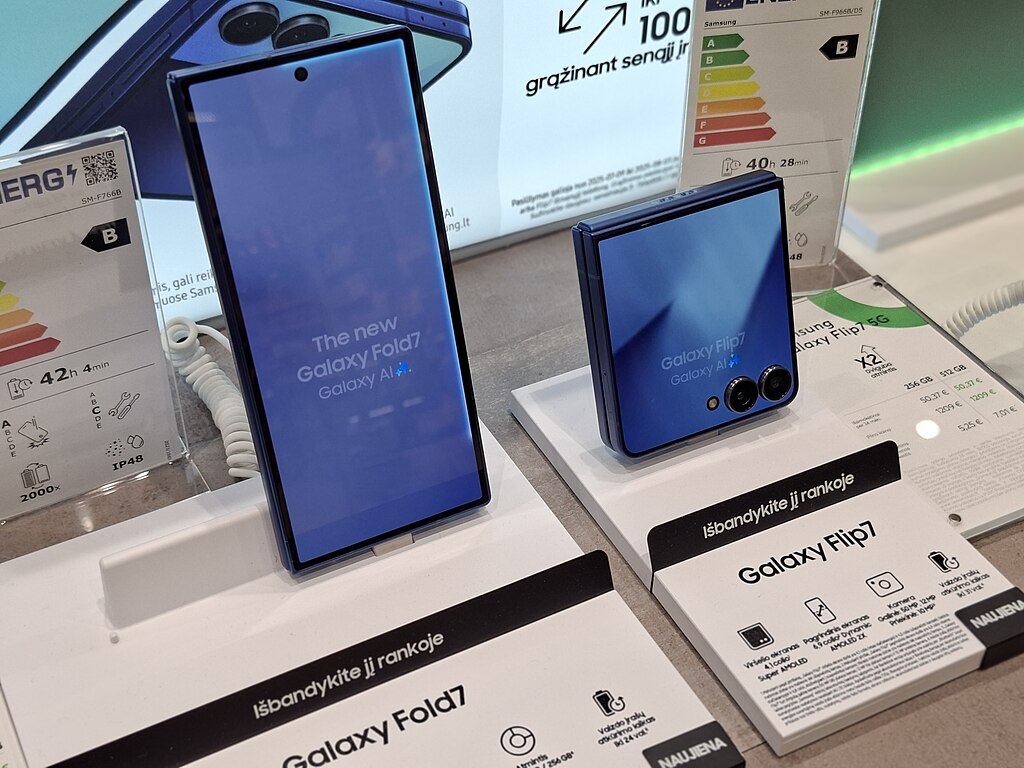
- Folded, the device is nearly twice as thick as the iPhone 14 Pro (8.9mm vs 7.85mm). Drop it in jeans pocket — feels like a brick.
- 215g of weight. The iPhone 14 Pro is 206g — not a huge gap, but the weight distribution differs. The Z Fold 7 stretches longer → holding one-handed for long, your wrist hurts.
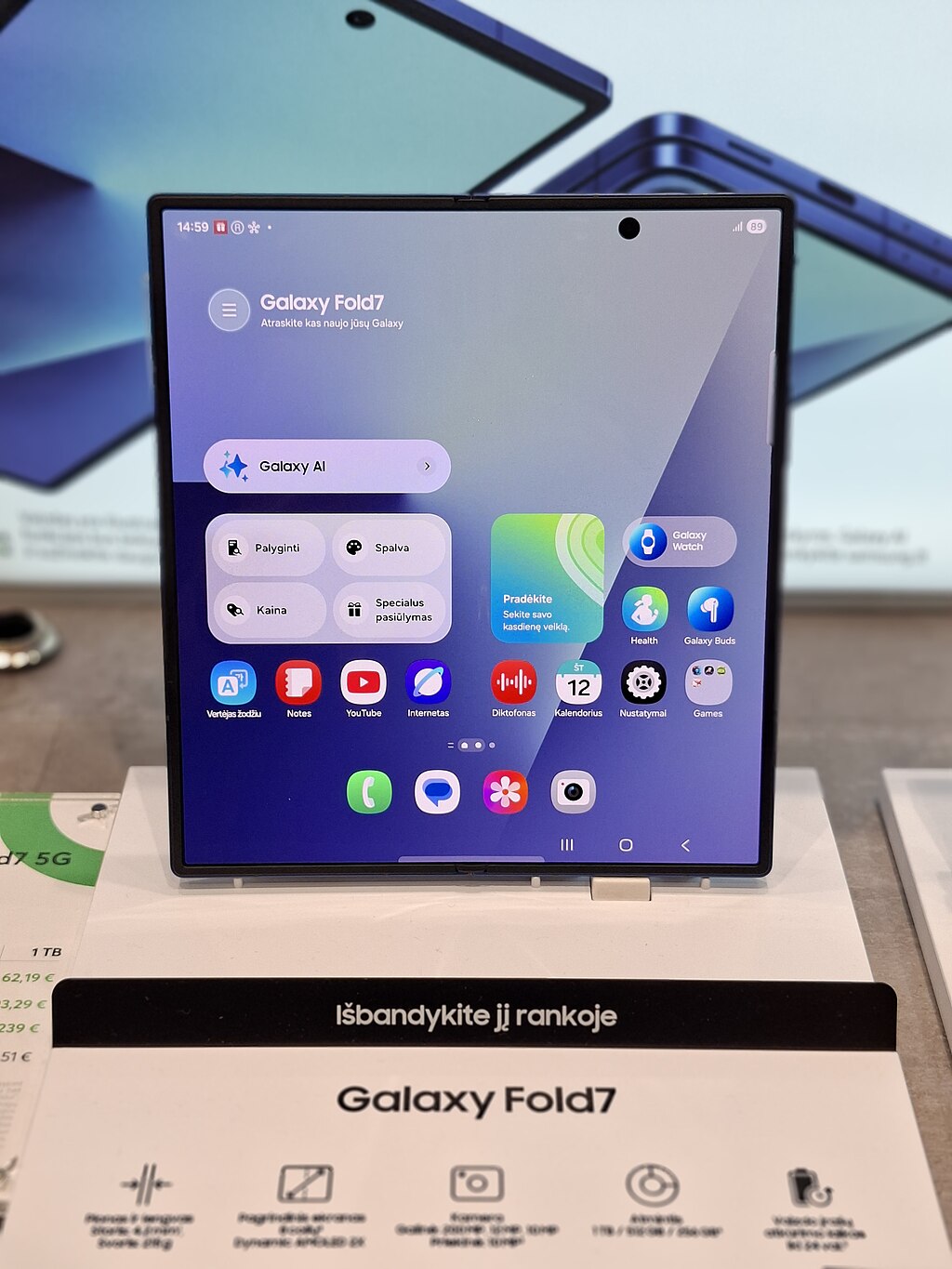
- First time opening the main screen — the wow factor is real. But the inner surface is way softer than iPhone glass. I was scared to press hard.
Week one I opened-and-closed the device 50+ times a day, just to see if it’d “feel natural.” By week two I was used to it — and started to discover why every reviewer says “must try in person to understand.”
How the workflow actually changed — 3 real anecdotes
1. SSH troubleshooting stopped being torture
September 2025, a client’s staging server went down at 11 PM. I was at a café with just the Z Fold 7 + earphones.
Open Termux, SSH into the server. Open the main screen → terminal showing 80 columns × 50 rows comfortably. Tail the log file, simultaneously split-screen open Slack to chat with the DevOps colleague.
The bug was a Redis connection pool exhaustion. In 25 minutes I: read the logs, identified the culprit, ran redis-cli flush pool, restarted the service. All from a phone propped sideways on a café table.
Same scenario on iPhone? Possible, but twice as slow, and after 30 min I’d give up and head home to MacBook. The Z Fold 7 saved me ~45 minutes and one stress spiral.
2. Reading docs + coding on the same device
Learning a new framework (Hono + Cloudflare Workers, November 2025). Old approach: laptop with split screen — docs on the left, editor on the right. Eye strain because 14” split is 7” each side.
New approach: open the Z Fold 7, route DeX (Samsung’s desktop mode) wirelessly to a 32” TV. Phone-side: editor on the 8” main screen. TV: browser + docs. Bluetooth mouse + Magic Keyboard via USB-C-to-USB hub.
This setup is specifically Z Fold 7 + DeX. iPad has Stage Manager but can’t SSH as comfortably as Termux on Android. Laptop can do it, but I won’t drag a laptop to bed at 11 PM.
3. Vietnamese banking apps + 2FA — clunky, but workable
This is the part Samsung doesn’t tell you. Vietcombank, MB Bank, Techcombank — all not optimized for big screens. Open them on the 8” → UI stretches by phone ratio, buttons become thigh-sized, like Microsoft Word zoomed to 200%.
Workaround: install App Cloner (or Samsung Good Lock with the MultiStar module) to force aspect ratio per app. The banking app runs at “phone aspect” inside a 6” frame in the middle of the screen → looks normal.
This is a clear minus for Z Fold 7 in the Vietnamese market. US/Korea, all top apps have already optimized. Vietnamese banking apps? Mark it down for Samsung-five-years-from-now to fix.
What 10 months taught me — pros that go deeper
After the first-week shock, I absorbed some insights:
The 6.5” cover screen isn’t an afterthought
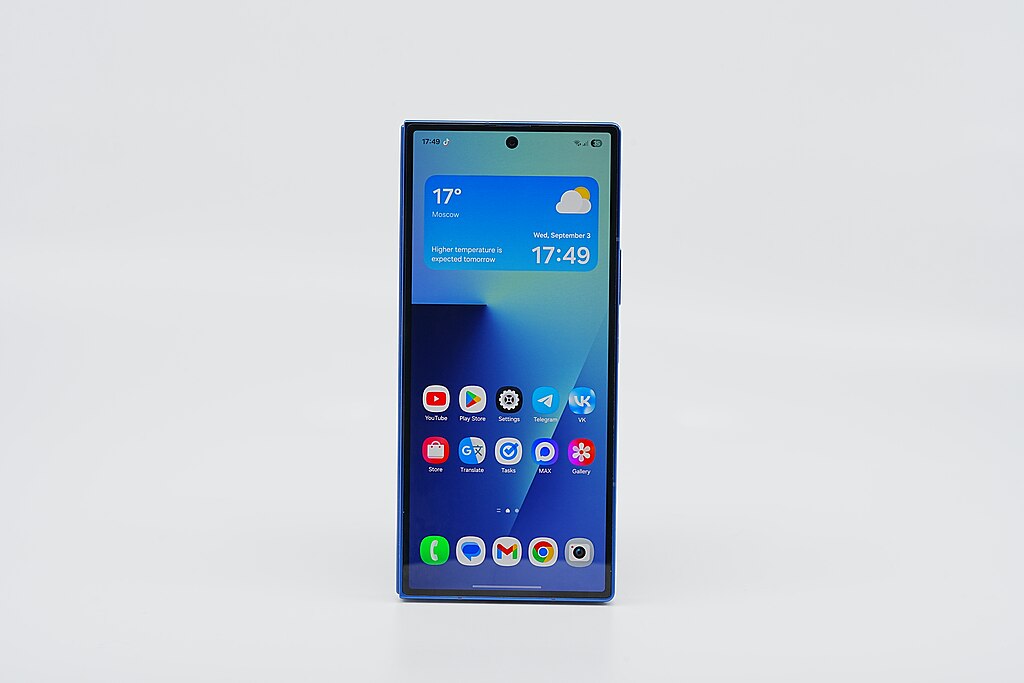
The Z Fold 7’s cover screen design (6.5”) handles 80% of daily tasks: chat, browser, news, camera, navigation. I open the main screen ~5–10 times a day, not 100 times like I’d assumed.
Insight: device stays folded most of the time → not draining the big screen → battery life is decent (4400 mAh stretches close to 1.5 days on light use). The Z Fold 7 isn’t a big-screen-only gadget — it’s a normal phone with an unfold-on-demand option.
The crease — yes, still there. Forgotten after 2 weeks.
Every YouTube review talks about the crease (the fold line down the middle). It’s real. Especially viewed at angle in strong light, the fold reads as a faint horizontal line.
But after 2 weeks of use → I stopped seeing it. The brain adapts. When focused on text or video, the crease is invisible. It’s not a real problem — it’s a problem reviewers psyche you into.
Hinge — smooth, but dust still gets in
10 months of use, the hinge feels as smooth as day one. The gap when folded was tightened from Fold 6 → Fold 7, and I see no notable space.
But — dust still gets in. I open the device sometimes and notice tiny dust particles at the edge of the inner display, between the screen protector and the panel. Doesn’t damage anything (Samsung claims IP48 — dust-protected against particles ≥1mm), but it’s not pleasant. I have to use a small brush to blow dust off every 2 weeks.
Battery after 10 months — acceptable
Installed AccuBattery to check: current capacity ~88% of new (4400 → ~3870 mAh). About 1.2% degradation/month — normal for fast-charged Li-ion.
In real use: when new, heavy use (gaming + camera + Termux) drained the battery by 11 AM → night. Now: drained by 8–9 PM. Noticeable difference, not catastrophic. I charge once daily like every modern smartphone.
What 10 months taught me — cons you can’t dodge
1. Weight is still a problem
215g still feels heavier than iPhone after 10 months. Lying in bed, holding the Z Fold 7 to read on Kindle app for 30 min → wrist ache, real. I had to buy a phone stand for the bedside table just to prop the Z Fold 7 while reading before sleep.
My wife (iPhone 13 mini user) tried holding the Z Fold 7 for 5 minutes, then handed it back: “feels like a brick, I don’t get how you use this.”
2. Camera — not bad, but not $2000
200MP wide on paper. In reality: the Z Fold 7 shoots fine in daylight, noticeably worse than iPhone 14 Pro in low light (I direct-compared at a phở stall in early evening). Samsung color science is still too saturated for my taste.
Camera isn’t why you buy a Z Fold 7. If camera matters → S25 Ultra or iPhone 16 Pro. The Z Fold 7’s camera is “good enough.”
3. Accessories cost a fortune
Official Samsung case: 1.5M VND (~$60). Beyond the 1-year warranty → if you want Samsung Care+, buy it early. S Pen Pro: 2.5M — and the Z Fold 7 doesn’t have an S Pen slot. You carry it separately.
I bought the S Pen at the 6-month mark, used it twice to sketch wireframes in a meeting → it’s been in a drawer since. Not for everyone.
4. Vietnamese apps: 1/10
Apps I use heavily that aren’t optimized for foldables: Vietcombank, Grab, Shopee, Foody, Be, Zalo (Zalo’s usable but buttons still follow phone ratio). Open them on the main screen → UI stretches ugly.
Workaround: App Cloner / MultiStar as mentioned. Or simpler — use these apps on the cover screen (6.5”) and never open them on the main screen.
Verdict — who should buy, who shouldn’t
Buy the Z Fold 7 if:
- You’re a dev/designer/PM using your phone for work outside the laptop. Multi-tasking, SSH, docs, sketching ideas — the Z Fold 7 actually changes the workflow.
- $2000 (50M VND) isn’t a hard ceiling for you.
- You’ll accept heavier, thicker, and some apps not being optimized.
- You see your phone as a work tool, not a fashion accessory.
Don’t buy if:
- You need flagship camera — the S25 Ultra is $400 cheaper and shoots clearly better.
- Your phone is mostly social media + photos — the big screen is wasted.
- You hate weight in your hand → hold one for several minutes before deciding.
Closing
After 10 months, I can’t go back to a flat smartphone. I tried picking up my wife’s iPhone 14 Pro → felt like holding a plastic card. Some part of my brain has rewired to expect the unfold.
This is the “you can’t go back” thing YouTube reviewers talk about. I was skeptical; now I confirm — right. The Z Fold 7 isn’t a few-percent improvement; it’s an entirely different category of how you use a phone. $2000 is steep, but if you use your phone as a work tool 4–6 hours a day like I do → the ROI calculates monthly, not yearly.
The Z Fold 8 is expected July 2026. I’ll watch — but if it’s just 0.5mm thinner, I’ll keep the Fold 7 another year. First phone in 5 years that doesn’t make me itch to upgrade immediately.
References
Specs, release date, and the technical numbers in this post were cross-checked against the three sources below — in case you want to verify or dig deeper:
- Samsung Galaxy Z Fold 7 — Wikipedia — release date, dimensions, weight, IP rating (IP48), Snapdragon 8 Elite for Galaxy chipset.
- Samsung Galaxy Z Fold7 — GSMArena — full spec sheet (display, 200MP/12MP/10MP cameras, 4400 mAh battery, charging speeds).
- Samsung — Galaxy Z Fold7 product page — official storage SKUs (256/512/1024 GB), Samsung Care+ pricing, region-specific colorways.
Apps + tooling I mentioned:
- Termux — terminal emulator + Linux env on Android, my SSH workflow lives here.
- Samsung DeX — desktop mode for casting to an external display.
- Samsung Good Lock (containing the MultiStar module used to force per-app aspect ratios on apps not yet optimized for foldables).
- AccuBattery — what I used to measure real battery health after 10 months.
All device photos in this post are from Wikimedia Commons — Category: Samsung Galaxy Z Fold 7 (CC BY-SA), downloaded locally before embedding.