Dandadan Season 2 — the best action-comedy anime of 2026, and why this combo is almost impossible to land
Dandadan S2 (Spring 2026, Science SARU) is 7 episodes in. Pacing tighter than S1, animation a step up, still unmistakably Tatsu Yukinobu's humor. This is the piece I wrote after sampling every Spring 2026 anime — and the reason a great action-comedy is one of the hardest combos in the medium.
Spring 2026 has nearly 50 new anime. I sampled the first 12. After 7 episodes, there is one I keep blocking time for every week: Dandadan Season 2.
Not Re:Zero S4 (which I’m watching). Not the One Piece Egghead final cour. Not Spy x Family S3. Dandadan.
This isn’t a balanced review. It’s me trying to articulate why a series about “teenage Japanese yokai + aliens + crisscrossing arcs” is the only show I haven’t skipped a single episode of — and why action-comedy done well is one of the hardest tricks the medium tries.
S1 was solid — S2 is sharper
S1 (Fall 2024, 12 eps) adapted chapters 1-32 of Tatsu Yukinobu’s manga. Science SARU produced it — the studio behind Devilman Crybaby, Inu-Oh, and The Heike Story. They have a track record with saturated palettes, non-realistic motion, and character expression that bypasses moe template.
S1 landed well (~8.2 MAL, 7.9 IMDb) — good, but pacing wobbled at points. The Acrobat Silky arc in particular got compressed from 8 chapters into 2 episodes and felt rushed.
S2 (Spring 2026, airing, projected 13 eps) adapts chapters 33-72 — the Cursed Mansion and Kaiju Number 20 arcs. 7 episodes in, every pacing complaint from S1 is gone. Each arc has room to breathe; fight choreography gets 4-5 minutes instead of a 90-second cut-storm.
The studio also reads more confident. The episode 4 climax (Momo vs Evil Eye) is animated near the level of top-tier shounen fight set pieces — close to the Mob Psycho 100 S3 “Mob unleashed” moment. I’m not handing that out lightly: timestamp episode 4, around 18:30 in.
Why action-comedy is one of anime’s hardest combos
Comedy and action are opposing emotional modes:
- Comedy needs relaxation, beat timing, dropped tension to land a laugh. Fast pacing with slack between punches.
- Action needs tension, compression, no air to let adrenaline rise. Fast pacing with no slack.
Most anime pick one:
- Pure action (Demon Slayer, Solo Leveling, Chainsaw Man S1): great but exhausting across 2-episode marathons.
- Pure comedy (Spy x Family, Kaguya-sama, Bocchi the Rock): great but no stakes.
Great action-comedy demands switching modes inside a single scene:
- One Punch Man S1 — canonical, the genre ceiling
- Kill la Kill — clean execution
- Mob Psycho 100 — the gold standard, subtle comedy + extraordinary action
- Cowboy Bebop — slow-burn action + dark humor
After Mob Psycho 100 wrapped (2022), nothing has filled the gap. Dandadan is the strongest candidate — and S2 is confirmation it wasn’t a S1 fluke.
Why is it rare? Because:
- The director has to nail timing — knowing exactly when to cut from a joke into a fight. Half a second off, one of the two dies.
- Voice actors have to switch modes — Momo goes from teasing Okarun (comedy) to screaming through power loss (action) inside the same minute. Wakayama Shion (Momo’s VA) is excellent at this.
- The composer needs two moods on tap — Yokoyama Kensuke is back for S2 — and he moves between disco-drum chase cues and somber string drones without seams.
- The source manga has to support it — Tatsu Yukinobu has drawn comedy panels and action panels side by side since day one. Not every mangaka does.
3 things Dandadan S2 nails
1. Color script — against the saturated-palette current
Most modern anime (post-Demon Slayer) reach for the high-saturation Aniplex palette: cyan + magenta + gold. Eye-catching but homogeneous.
Science SARU runs emotion-mapped contrast:
- Japanese yokai scenes: warm yellow-orange-red tones, classical
- Alien scenes: cold blue-purple-cyan, sci-fi
- Normal school scenes: pastels with thick outline, a callback to 90s shoujo manga
When the story moves between these three worlds, the palette shifts immediately — you don’t need subtitles to know “we’re in different lore now.” That’s high-level visual direction.
2. Sound design — the silent beat
The rarest trick Dandadan uses: kill the score entirely on important moments. Episode 6, the moment Momo realizes Granny is standing at the end of the hallway. No music, no SFX, just breathing. Eight seconds of silence scare harder than two minutes of swelling strings ever could.
Most anime fear silence — they lay an ambient bed under everything. That’s wrong. Silence is a weapon.
3. Character dynamic — Momo + Okarun aren’t a tsundere template
Romance in modern shounen anime tends toward a tsundere recipe: one stubborn girl, one timid boy, repeated misunderstandings stretched across 50 episodes. Exhausting.
Momo and Okarun are actually friends by episode 3. They argue because they genuinely disagree (Momo believes in yokai, Okarun believes in aliens), not because of tropes. After standing shoulder to shoulder against Acrobat Silky, both are openly dependent on the other — not in a “we kept accidentally bumping into each other” way.
This is romance written like adults, fit to the characters. Tatsu Yukinobu understands something Kishimoto/Oda never quite grasped: two characters with real chemistry don’t need to keep denying it to manufacture drama.
One weakness — the Kaiju Number 20 arc pacing
Episodes 5-6 enter the Kaiju Number 20 arc a bit too quickly. The manga arc is 18 chapters; the anime compresses it into 4 episodes. I read the manga so I caught what got cut (background on Jiji and his family). Anime-only viewers may struggle to understand why Jiji suddenly trusts Momo.
Not fatal — still watchable, still good — but if Science SARU had spent one more episode on character beats, this arc lands at 9.5/10 instead of 8.5/10.
Why I’m watching weekly, not marathoning
I love marathons. Most anime I watch by waiting for a season to finish and binging across a weekend. Reason: the freelance dev schedule doesn’t always allow a fixed 30-minute weekly slot.
Dandadan S2 is the exception. I watch each episode the Saturday night it subs. Why?
- Each episode is a complete emotional unit — no cheap cliffhangers forcing the next play button. The episode ends when it should.
- The week between episodes builds anticipation — same feeling as 2017 Sunday-night Game of Thrones.
- Online discussion is still alive — a few anime communities (r/Dandadan, anime Twitter) discuss heatedly. Marathon = miss the discussion window.
- I need one thing that’s just-for-fun in the middle of a 50-hour code week — weekly anime is a clean rest cadence.
Verdict
Dandadan S2 is the best anime of Spring 2026, by a margin. Re:Zero S4 is great in a different way (drama-heavy, slow), but Dandadan is the show I recommend to people who have never watched anime — because:
- No prerequisite knowledge needed (no 300-episode Naruto/One Piece lore stack)
- Comedy + action in balance, no exhaustion
- Visual style unique in the current market
- 13 episodes — when it ends, it ends. No long-term commitment.
If you haven’t seen S1 — watch it on Crunchyroll/Netflix (12 eps, 5 hours). Then catch S2 on Crunchyroll, streaming every Saturday.
Don’t wait for S2 to finish to marathon. Good anime is rare enough that you should live-watch with the community.
Sources
- Dandadan manga by Tatsu Yukinobu, Shueisha (Shounen Jump+), 2021-present.
- Dandadan anime adaptation, Science SARU — Season 1 (2024) + Season 2 (Spring 2026).
- Score reference: Dandadan on MyAnimeList.
- S2 OST composer: Yokoyama Kensuke.
- VA Momo Ayase: Wakayama Shion. VA Okarun: Hanae Natsuki.
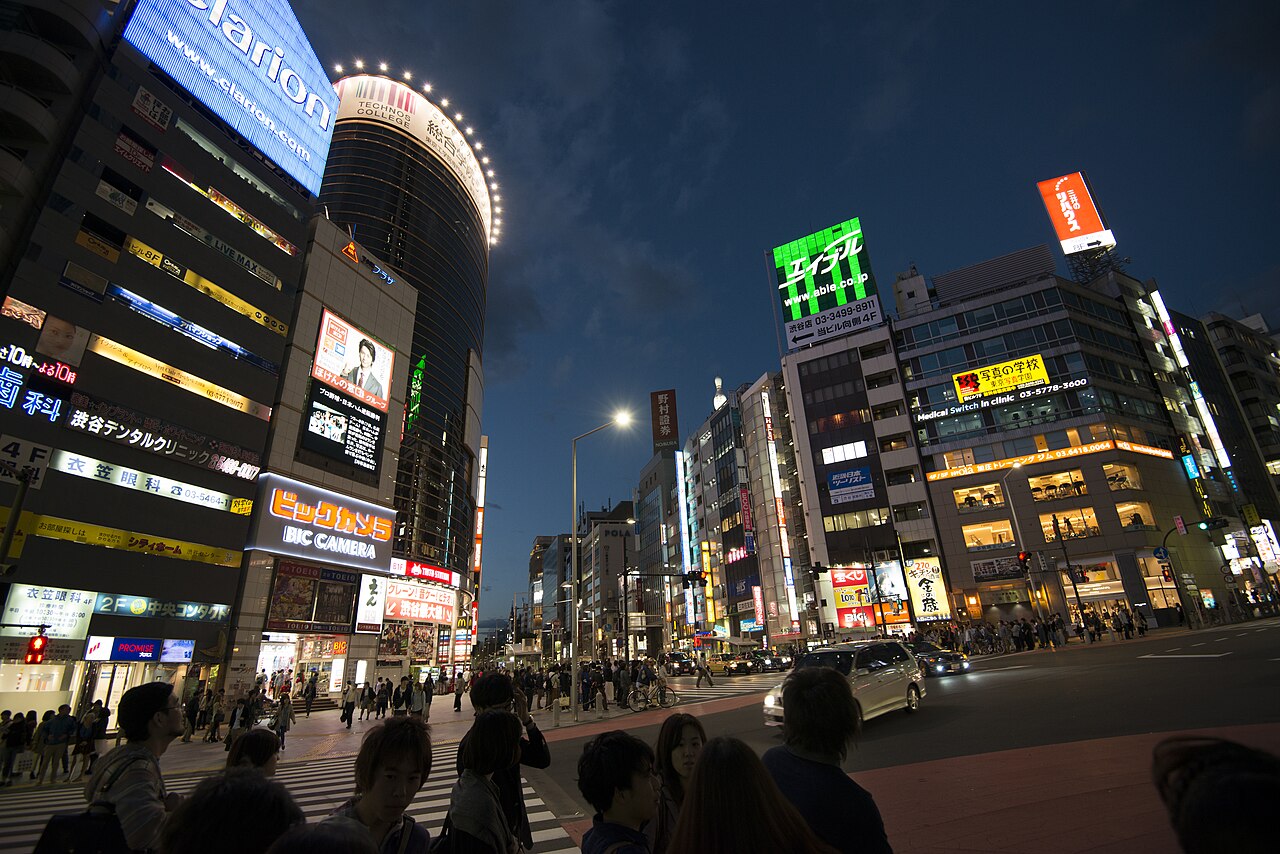
- Illustration: Shibuya neon, Wikimedia Commons, Neon in the streets of Shibuya, CC BY 2.0 (urban-Tokyo stand-in for the series’ setting).
.jpg)